
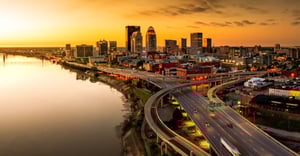
In contrast to other parts of the country, Louisville hasn’t been defined by headline-grabbing climate extremes. There have been no sustained heat waves on the scale of the Deep South, no coastal flooding events and no single weather event that clearly “changed everything.”
Yet builders and contractors in the region say projects feel harder to schedule and manage than they did a decade ago.
The issue isn’t dramatic weather disruption; it’s the quiet erosion of predictability. Subtle shifts in temperature, rainfall and seasonal stability are compounding across schedules, soils, materials and finishes—turning what once felt routine into a series of uncertainties.
Compared to 1970, according to a regional analysis from nonprofit Climate Central, Louisville and its immediate surroundings now experience:
-
21 more days above 90 degrees, and eight more days above 95 degrees.
-
An extension of warm-season conditions by an average of 13 days, based on the timing of the last 85-degree day of the year.
-
26% increase in rainfall intensity, as measured by the average amount of rainfall per hour—even while total annual rainfall hasn’t changed.
Overall, summers begin earlier and end later, and summer nights offer less opportunity for cooling. Rainstorms are generally briefer but more intense and disruptive. So heat and rain have changed—even if it doesn’t feel extreme.
From a construction standpoint, warmer nights slow moisture release from concrete and other wet materials. Drying and curing windows stretch, even when daytime temperatures seem manageable. Crews experience cumulative heat stress over longer periods, which affects productivity—even in the absence of record-breaking highs.
The result is fewer natural breaks in the construction calendar when weather conditions can be relied on to help materials and crews recover.
Rain and flooding
Of all the weather changes affecting Louisville construction, shorter, heavier rainfalls are the most consequential.
For builders, this translates directly into longer periods of saturated soils, especially in spring and early summer. Earthwork, foundations, trenching and site access are more likely to be delayed because the ground takes longer to recover between rain events.
Drainage systems designed around older rainfall assumptions are also being tested. Even when sites are properly engineered, intense rainfall can overwhelm temporary jobsite precautions, forcing resequencing and added protection measures.
These delays rarely stop projects outright, but they make schedules less forgiving by eroding float—the built-in buffer that allows projects to absorb delays.
Flooding too has always been part of Louisville’s risk profile due to the Ohio River. What has changed is the frequency of inland and localized flooding away from the river itself.
Heavier rainfall events increase runoff and strain stormwater systems, leading to more frequent water issues on sites that are not traditionally considered flood-prone. This has led to greater floodplain scrutiny, more conservative site design assumptions and increased concern from insurers and regulators.
Unstable winters
Winters bring fewer prolonged deep-freezes—periods of five days or more in which temperatures remain below freezing. Instead, conditions are increasingly dominated by frequent freeze-thaw cycles, based on analysis of daily NOAA temperature data from Louisville-area weather stations.
This pattern is especially challenging for construction—increasing stress on slabs, masonry, pavements and exterior finishes. Materials expand and contract more often, raising the risk of cracking, spalling and premature deterioration.
From a scheduling standpoint, winter work becomes harder to plan. Cold-weather protections may be needed intermittently rather than continuously, increasing cost and uncertainty. Crews and materials are subjected to stop-start conditions that are difficult to anticipate weeks in advance.
Variability replaces normalcy
Taken alone, none of these shifts is dramatic. But together, they create a construction environment where variability replaces reliability.
Builders experience this as more contingency planning, more unexpected delays and more owner questions about why schedules feel tighter and less predictable than previously. A wide body of research, including a report from weather data consultancy Cordulus, points to weather variability and sequencing pressure as growing contributors to cost overruns and claims.
For Louisville builders, the takeaway is not disaster planning. It’s variability planning. Realistic schedules, moisture-aware sequencing, soil recovery time and early communication with owners about weather-driven uncertainty are quickly becoming standard best practices.
Construction in Louisville hasn’t become riskier overnight. It has become less predictable. Builders who recognize that shift and plan accordingly are better equipped to protect schedules, control costs and deliver consistent results in a market where “normal” conditions are increasingly hard to define.
Let Best Supply help to keep your next project on schedule, with on-time delivery, careful material shakeout and expert help to specify the right materials for the job. Click here to request a quote or get in touch.