
Walk the floor at any major equipment trade show right now and you’ll find electric compact machines that weren’t there two years ago.
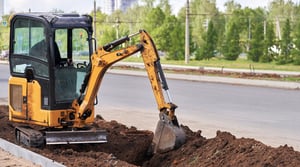
Examples include the Case TL100EV mini track loader; the battery-powered E25X mini excavator from New Holland; and Volt’s EV-X2 compact excavator—priced to move at around $30,000.
The specifications of these small construction machines tend to match their diesel-powered counterparts. And in terms of energy efficiency, electric motors easily beat internal combustion engines.
The offerings sound tempting—particularly in a year when diesel fuel prices have neared or exceeded all-time highs.
But the sticker shock is real. Electric versions of compact equipment currently carry a price premium of 30% to 100% over traditional equivalents, depending on the category, size and manufacturer.
Total Cost of Ownership
For many, the price tag ends the conversation before it even begins. But the real question is if the lower cost to operate this class of equipment is enough to overcome its premium price.
There are a number of considerations that determine the answer. The two main cost drivers that favor electric are:
Fuel: Electricity costs meaningfully less than diesel per unit of energy, and the gap can translate into thousands of dollars per machine per year for equipment that gets heavy use.
Maintenance: The biggest maintenance expenses for diesel equipment are all in the power plant and emission systems. Electric machines eliminate most of that, saving an estimated 50% on maintenance costs over the full life cycle, according to a range of industry sources.
The investment in an electric mini excavator that costs 40% more up front but saves $4,000 to $6,000 per year in fuel and maintenance might look pretty good after five years.
But there are other factors:
Utilization: If you use a piece of equipment every day, the savings from electric accumulate quickly. If it only runs two days a week, the savings may never be enough to offset the higher purchase price. To overcome the premium price for electric equipment, you need to use it long and hard.
Charging infrastructure: Most electric v. diesel comparisons focus on fuel and maintenance; they skip the one cost that’s unique to electric—the charging setup.
You can fill a diesel excavator from a bulk tank, fuel truck or jerry can—all methods that are familiar and portable. An electric machine needs a proper charging circuit. The recommended baseline is a Level 2 setup: a 240-volt, 32-amp dedicated circuit. Based on information from power management supplier CyberSwitching, count on a price range of $2,500-$6,500. A typical 24 kWh battery on a compact machine will need roughly eight hours to charge from near-empty on that setup, according to guidance from United Rentals.
You can get a charge roughly 4x faster from a Level 3 setup—also referred to as DC fast charging. Available in both permanent and mobile setups, these are more expensive: $10,000-$40,000, CyberSwitching notes.
That expense may be justifiable for a compact loader or excavator that will be used in a fixed location with grid access. But on a remote site without established power, or a multisite operation where equipment moves constantly, access to a charger becomes more difficult. Charging machinery from a diesel generator defeats the energy efficiency advantage and any emissions reduction.
For many builders looking at electric units, the charging infrastructure is likely to be a deciding factor.
Where Electric Equipment Does Well
If you put all that into a spreadsheet, the case for electric compact equipment may have more to do with where it will be used than what it will cost.
Jobsites with noise and emission restrictions—like hospitals, schools, urban infill projects and enclosed spaces—favor electric equipment, and may enable you to get a higher cost-per-hour. If such jobsites are part of your regular work, electric equipment may not only pay for itself—it may be the thing that gets you in the door.
Beyond that niche, high-utilization operations at a fixed yard or site with reliable grid access are the strongest economic fit.
As battery prices continue to drop, electric equipment will become easier and easier to cost-justify. Until then, here’s where it’s unlikely to make sense:
-
Any location without reliable grid access
-
Types of equipment that won’t get daily use
-
Freezing weather—which reduces battery life and increases charge times
-
Larger classes of machinery, where the price differential remains highest
The cost of electric equipment will become increasingly competitive over time, and the product lineup will continue to grow. If a compact loader or excavator doesn’t make sense in your business today, don't write it off altogether.
The Best Supply team will help plan your takeoff, identify the right materials and deliver your supplies and tools to the jobsite when and where you need them. See how we can help with your next project.